Residential concrete in Chelsea
Chelsea is one of the youngest cities in the Birmingham area. It incorporated in 1996, and most of its houses have gone up since then, in subdivisions spread along and below the Highway 280 corridor. Around those neighborhoods are wooded acreage, small farms and homes on larger lots. This page covers both sides of Chelsea: catching early problems in subdivision concrete that is still fairly new, and planning drives and shop pads on rural land.
A railroad stop that became a fast-growing city
The community grew up around a railroad line that came through in 1908, and it was still a community of fewer than a thousand people when it incorporated in 1996. After that, new home construction drove rapid growth, and the population rose from a few thousand around 2000 to roughly fifteen thousand by 2020. U.S. 280 runs through the northern part of the city, and Double Oak Mountain rises to the northwest.
That growth pattern means most of Chelsea’s concrete is young. Many driveways and patios are under twenty-five years old, and some were poured during busy building years when schedules were tight. Those slabs are now old enough to show how well the ground beneath them was prepared.
Reading early cracks in a young subdivision
Concrete cracks; joints are there to tell it where. A thin crack that runs along or near a joint, stays tight and stays level is usually nothing to worry about. Warning signs on a newer slab are cracks that widen, edges that sit at different heights, panels that rock underfoot and water that pools in new places after rain.
Those signs usually point to the ground: fill that was not compacted well, soil that washed out under an edge, or clay that swells and shrinks with the seasons. Fixing the concrete without addressing the cause tends to produce the same problem again. When you ask for an estimate, describe when the cracks appeared and whether they have changed.
Planned communities and HOA expectations
Chelsea Park and other planned neighborhoods have consistent streetscapes and HOAs that care about how driveways, walks and visible patios look. Additions such as a wider drive or a side parking pad are often reviewed, and some communities have preferences on materials and finishes.
Getting HOA approval first saves time. Ask what drawings or details they need, how long review takes and whether there are rules about where vehicles, boats or trailers may be parked. Share the approved plan with the contractor so the work matches what was submitted.
Acreage: long drives and gravel conversions
On the wooded and rural edges of the city, many homes sit at the end of long gravel or dirt drives. Converting part or all of one to concrete is a large project. A long drive needs a solid base along its full length, attention to where runoff crosses it, and thought about culverts where it passes over a ditch or a wet spot.
Some owners pave only the steep section, the curve near the house or the area that washes out most often, and keep gravel elsewhere. That can be a sensible way to spend money where it does the most good. Ask the contractor how the transition from gravel to concrete will be built so the edge does not chip and erode.
Shop, barn and garage pads
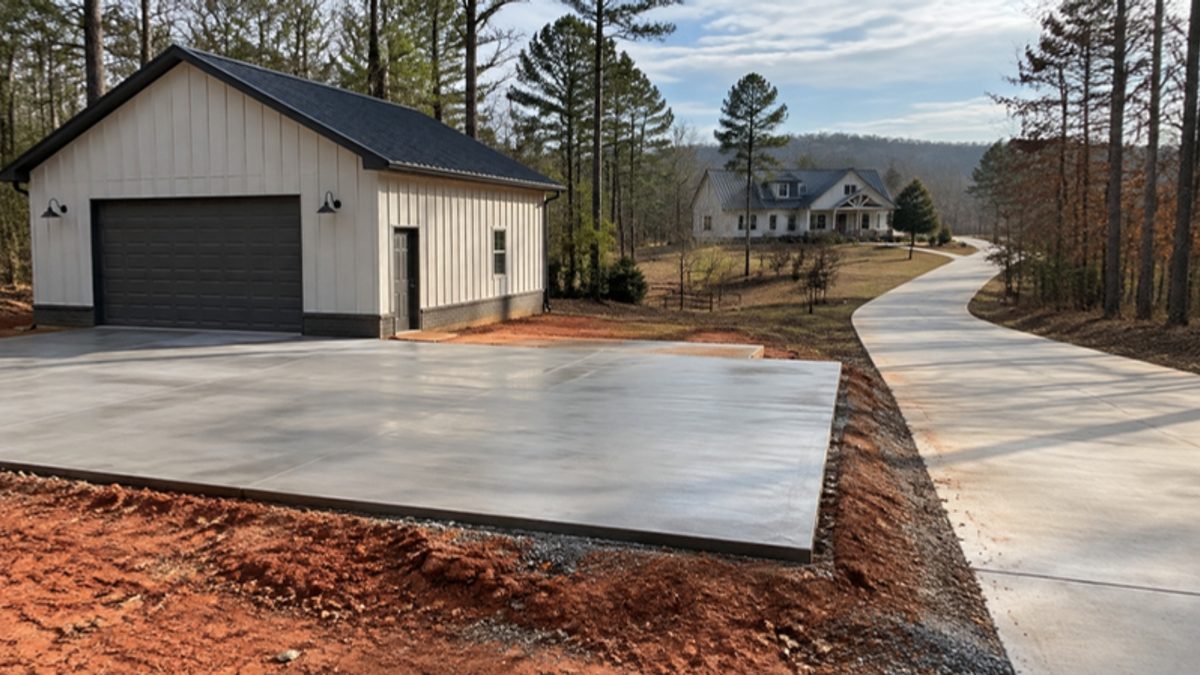
Larger lots often get a detached garage, shop or barn, and that building needs a slab. Pads for buildings that will hold vehicles, tractors or heavy tools are typically thicker and more reinforced than a patio, and the base needs to be well compacted. The red clay common in the area can swell when wet, so drainage around the pad matters.
If a building kit is going on the slab, get its exact footprint and anchor requirements to the contractor before the pour. Coordinate who sets the anchor bolts and when the building crew will arrive.
Checklist for a Chelsea concrete project
- Note when cracks first appeared and whether they have changed.
- Get HOA approval before scheduling visible work.
- For long drives, plan culverts and runoff crossings early.
- Decide which sections of a gravel drive are worth paving first.
- Share building plans and anchor locations before a shop pad is poured.
- Confirm access for trucks on soft or unpaved ground.
City and county offices
Chelsea has its own city government, while some nearby properties lie in unincorporated Shelby County with a different office. Depending on your address and the scope of work, either may have a say, especially for driveway connections to public roads and changes to drainage. Check with the right office before scheduling and pass along what you learn.
What homeowners here ask most
Our Chelsea driveway is only ten years old and cracking. Is that normal?
Some cracking is normal, especially thin cracks near joints. Cracks that widen, edges at different heights or panels that move underfoot suggest a problem with the ground beneath, such as settling fill or washed-out soil. Take photos and note when the cracks appeared. A contractor can tell whether the cracks are cosmetic or a sign of something that needs attention.
Is it worth paving only part of a long gravel driveway?
Often, yes. Paving the steepest stretch, a curve that washes out or the area closest to the house can solve the biggest problems without the cost of the full length. The key is a solid transition between gravel and concrete so the edge does not chip. Ask the contractor which sections would benefit most from paving.
What does a shop or barn pad need that a patio does not?
More strength and planning. Shop and barn pads usually need greater thickness, more reinforcement and a well-compacted base to carry vehicles and equipment. They often require anchor bolts placed for the building, and good drainage around the edge. Share the building’s footprint and anchor plan with the contractor before the pour.
Will my HOA need to approve a wider driveway?
Many HOAs in planned communities review driveway widening and parking pads because they change how the home looks from the street. Some also limit where boats or trailers can be parked. Check your covenants and submit any required plans before scheduling the work, then share the approved plan with the contractor.
Why does water pool on my newer patio?
Pooling usually means the patio has settled unevenly or was not pitched enough to shed water. Settling fill beside a newer house is a common cause. Standing water can stain the surface and, near the house, send moisture toward the foundation. A contractor can check the slope and the ground beneath to recommend lifting, partial replacement or a new slab.
Can a concrete truck drive on my unpaved property?
Loaded concrete trucks are very heavy and can get stuck or leave deep ruts on soft ground, especially after rain. On rural lots, contractors may wait for dry weather, use a pump, or plan a route over firm ground. Describe your access route and any soft spots when requesting an estimate so the contractor can plan for them.
Talk through your project
Start with the address, what you want poured or replaced, rough dimensions, and a few photos of the area and any existing concrete.
The work, by type
Concrete Driveways
New drives, widening and tear-out on sloped Birmingham lots.
Concrete Patios
Backyard patios pitched to carry storm water off, not in.
Stamped & Decorative Concrete
Pattern, color and aggregate finishes, and the sealer they need.
Walkways & Steps
Front walks, stoops and even steps up hillside yards.
Garage, Shed & RV Slabs
Pads for sheds, shops, garages, boats and campers.
Concrete Repair & Replacement
Reading a failed slab before choosing patch, lift or tear-out.