Residential concrete in Homewood
Homewood is one of the older suburbs in the Birmingham area, and its streets show it: houses close together on modest lots, porches a few steps above the sidewalk, narrow driveways squeezed between neighbors, and a mix of bungalows, cottages and newer rebuilds. Concrete projects here are usually small in area but tight in every other way. This page covers what makes Homewood jobs different, from access and drainage to working near a historic house.
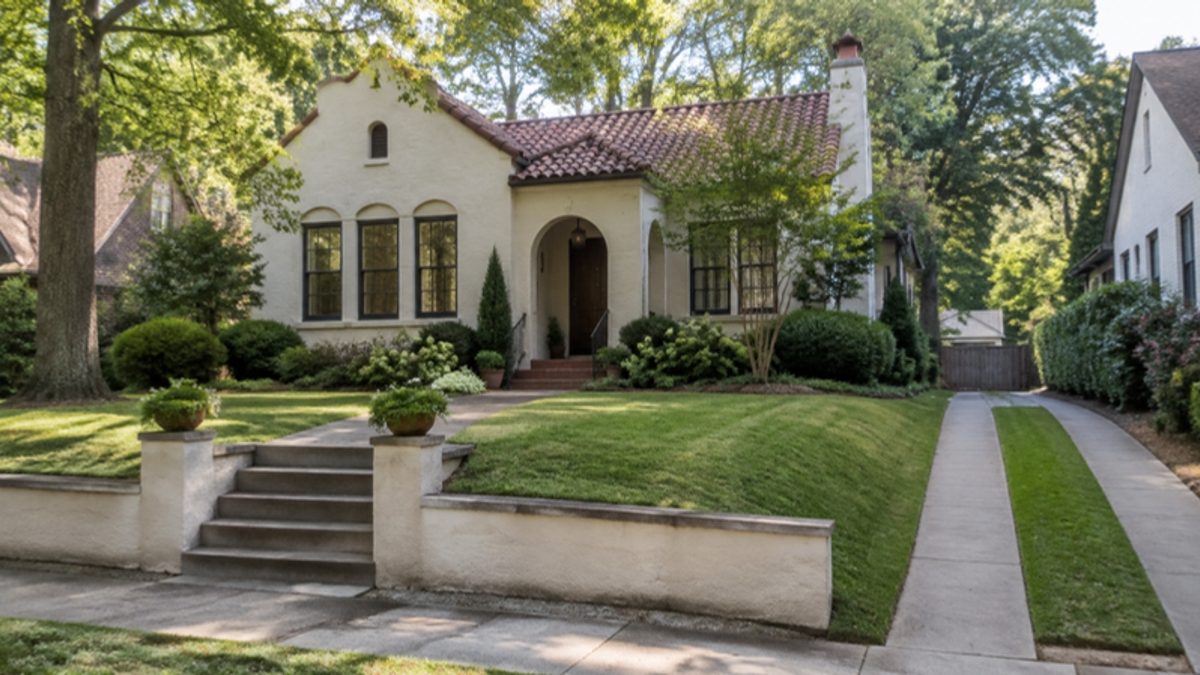
An older suburb with close-set lots
Homewood was formed in 1926 when the communities of Edgewood, Rosedale and Grove Park merged. The Hollywood neighborhood joined a few years later, and Oak Grove was added in 1955. Hollywood is known for its Spanish Colonial Revival houses and is listed as a historic district. Much of the rest of the city filled in during the following decades, with growth especially strong in the 1940s.
That age shows up in the concrete. Front walks and steps may be original or rebuilt many times. Driveways are often single-car width, sometimes just two strips of concrete with grass between them. And because houses sit close together, there is little room for equipment, spoils or a truck to maneuver without affecting a neighbor.
Narrow driveways and ribbon strips
Ribbon driveways, two parallel strips with a planted center, are a classic feature on older lots. They shed less water than a full slab and suit the look of a period house. They are also easy to damage, since tires that drift off the strip rut the grass and break the edges. When replacing one, decide whether to keep the ribbon style, widen the strips slightly, or switch to a full-width slab.
Width is often limited by the property line, a neighbor’s fence or the side of the house. If you want to widen, ask the contractor to measure the real usable space first. A slightly wider drive that still leaves room for drainage along the edge usually works better than one pushed right up to the line.
Porch steps, stoops and front walks
Many Homewood houses sit a few feet above the street with steps up from the sidewalk and more steps to the porch. Over time those steps settle, separate from the walls beside them, or develop uneven risers. A walk that has tipped toward the house can send rain straight to the foundation.
Rebuilding steps is a good time to even out riser heights, widen treads and confirm the walk slopes away from the porch. If the steps run between low walls or planters, those may need repair as well, and it is easier to handle them together than in separate trips.
Shades Creek, Griffin Brook and low ground
The city identifies its local flood hazard areas as lying mainly along Shades Creek, its tributaries and Griffin Brook, and notes that flooding can reach other locations too. If your property is in one of those low areas, concrete placement needs extra thought. A patio or driveway that sits slightly too low or blocks a natural path for water can make flooding worse, both for you and for the neighbors downstream.
Before planning new paving, check whether your lot lies in a mapped flood area, watch where water collects during a heavy storm, and share that with the contractor. Adding hard surface may also need review in these areas, so ask the city early.
Getting concrete onto a tight lot
Small lots and narrow side yards make access a major part of the plan. A ready-mix truck may not be able to back up the driveway without damaging it or the lawn, and overhead lines, low branches and parked cars can block the street. Back-yard work may require a pump with a long hose or concrete wheeled in by hand.
Talk with your neighbors before the pour if the work will block a shared drive or the street for part of the day. Ask the contractor how long access will be needed, where the truck will park, and how the sidewalk and curb will be protected.
Details to settle before a Homewood job
- Whether the house is in a historic district and what that means for visible work.
- Exactly where the property line runs along the driveway.
- How the new slab will meet the public sidewalk and curb.
- Where water from the roof and the new surface will drain.
- How the truck or pump will reach the work area.
- How old concrete will be removed from a small site.
Historic districts and city review
Homes in historic districts can face additional guidelines for changes visible from the street, such as front walks, steps and driveway aprons. Requirements depend on the district and the scope of work. Contact the City of Homewood before scheduling to learn what applies to your address, and keep any guidance handy so the contractor can plan around it.
What homeowners here ask most
Is a ribbon driveway still a good idea?
It can be, especially on an older house where it suits the style. Ribbons use less concrete and leave more ground for rain to soak in. They do require careful driving and a firm edge, since tires that slip off can rut the grass and crack the strips. If you park heavy vehicles or turn often on the drive, a full-width slab may be more practical.
My front steps are uneven. Can just one step be fixed?
Sometimes a single damaged tread can be repaired, but uneven risers usually come from the whole set settling or having been built inconsistently. Rebuilding the full flight lets every step be the same height, which is safer and easier to climb. A contractor can look at the steps, the walls beside them and the ground underneath to recommend the right approach.
Our lot is near Shades Creek. Can we still add a patio?
Often, yes, but placement and drainage matter more on low ground. A patio should not block the path water takes across the lot or sit where floodwater collects. Additional paving in flood-prone areas may also need review. Check whether your property is in a mapped flood area, talk with the city, and share what you learn with the contractor before finalizing a design.
How does concrete get to a back yard with no driveway access?
On many Homewood lots, the answer is a concrete pump or smaller loads wheeled in by hand. A pump can send concrete through a hose from the street over a fence or along a side yard. This adds planning and can affect timing, so describe the route from the street to the work area when you ask for an estimate.
Will replacing my driveway apron involve the city?
The apron, where your driveway meets the street, often lies within the public right-of-way, and work there may need city involvement. The same can apply to the public sidewalk crossing your driveway. Requirements vary, so contact the City of Homewood before scheduling, and let the contractor know what you learn.
Can new concrete be made to look less stark next to an old house?
Yes. A finer broom texture, a smooth border, a light tint or exposed aggregate can all help new work sit more comfortably beside older materials. New concrete is brighter at first and softens over time. Look at nearby examples or ask for samples so you can choose a finish that will still suit the house a few years from now.
Talk through your project
Start with the address, what you want poured or replaced, rough dimensions, and a few photos of the area and any existing concrete.
The work, by type
Concrete Driveways
New drives, widening and tear-out on sloped Birmingham lots.
Concrete Patios
Backyard patios pitched to carry storm water off, not in.
Stamped & Decorative Concrete
Pattern, color and aggregate finishes, and the sealer they need.
Walkways & Steps
Front walks, stoops and even steps up hillside yards.
Garage, Shed & RV Slabs
Pads for sheds, shops, garages, boats and campers.
Concrete Repair & Replacement
Reading a failed slab before choosing patch, lift or tear-out.
More of Jefferson County
Jefferson County overview
Birmingham, Homewood, Hoover, Trussville and the older terraced lots in between.
Hoover
Bluff Park slopes, Riverchase-era drives and newer Ross Bridge and Trace Crossings lots.
Vestavia Hills
Steep Shades Mountain lots, terraced patios and mid-century drives.
Mountain Brook
Front walks and steps on wooded, winding lots near the three villages.
Trussville
Newer subdivision drives and patios along the upper Cahaba.